Blog
Articles
Data quality tools compared (2026): Foundational, Monte Carlo, Great Expectations, Soda, dbt tests

Data quality tools compared (2026): Foundational, Monte Carlo, Great Expectations, Soda, dbt tests

Articles
November 24, 2026
Team Foundational
Subscribe to our Newsletter
Get the latest from our team delivered to your inbox
Thank you! Your submission has been received!
Oops! Something went wrong while submitting the form.
Ready to get started?
Try It Free
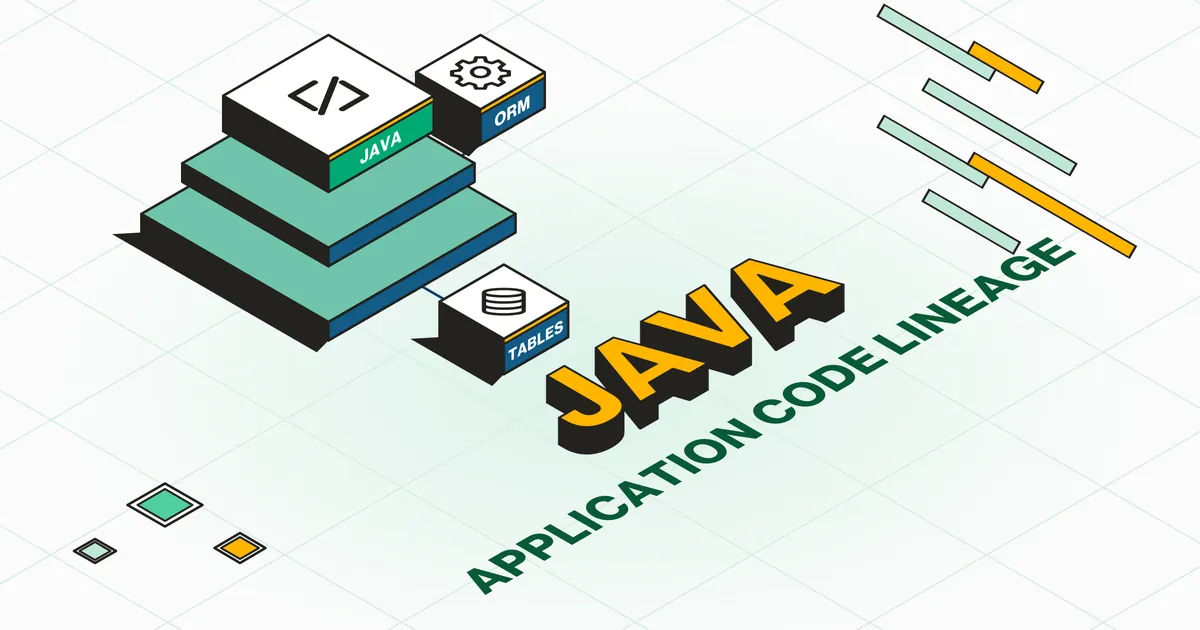
Isometric illustration of a code block connected to a data flow graph card.

Before bad data reaches a dashboard, catch it in the pull request. Foundational checks code and contracts before merge, while Monte Carlo, Great Expectations, Soda and dbt tests check data once it exists.

Why quality issues start in the code

Take order_status on an orders model. The model is supposed to write only paid, shipped, returned or cancelled, and a revenue dashboard filters on those four values. A pull request adds pending_review. The dbt model still builds and the warehouse accepts the rows, so the dashboard quietly drops the new orders until someone notices the gap.

A quality tool can catch that in two places:

  • In the change itself
    The new value is already in the code, and a contract or impact check can flag it in the pull request, before merge.
  • In the data after it exists
    Tests and monitors run against tables or batches, once the model has been built or the rows have landed.

Both have a role, so the sections below start with the pre-merge check and then cover the tools that validate data once it exists.

Data quality tools at a glance

The five tools below split along that line. Foundational reads the change and the contract before merge, and the other four check data after it exists, in tests, CI or production.

Tool How it finds issues When it runs Fits when
Foundational Analyzes code changes, contracts, and anomaly detection In the pull request, and in production data You want issues caught before code ships
Monte Carlo Monitors production data, anomalies, and schema changes After data lands in the warehouse You need production detection and incident response
Great Expectations Runs expectation tests on data batches In notebooks, pipelines or CI You want a Python test framework for data
Soda Runs YAML checks, including schema and freshness As code, in your quality workflow You want checks as code shared across teams
dbt tests Runs assertions on dbt models and sources When you run dbt test, including in CI Your quality checks live inside a dbt project

How each data quality tool works

Foundational

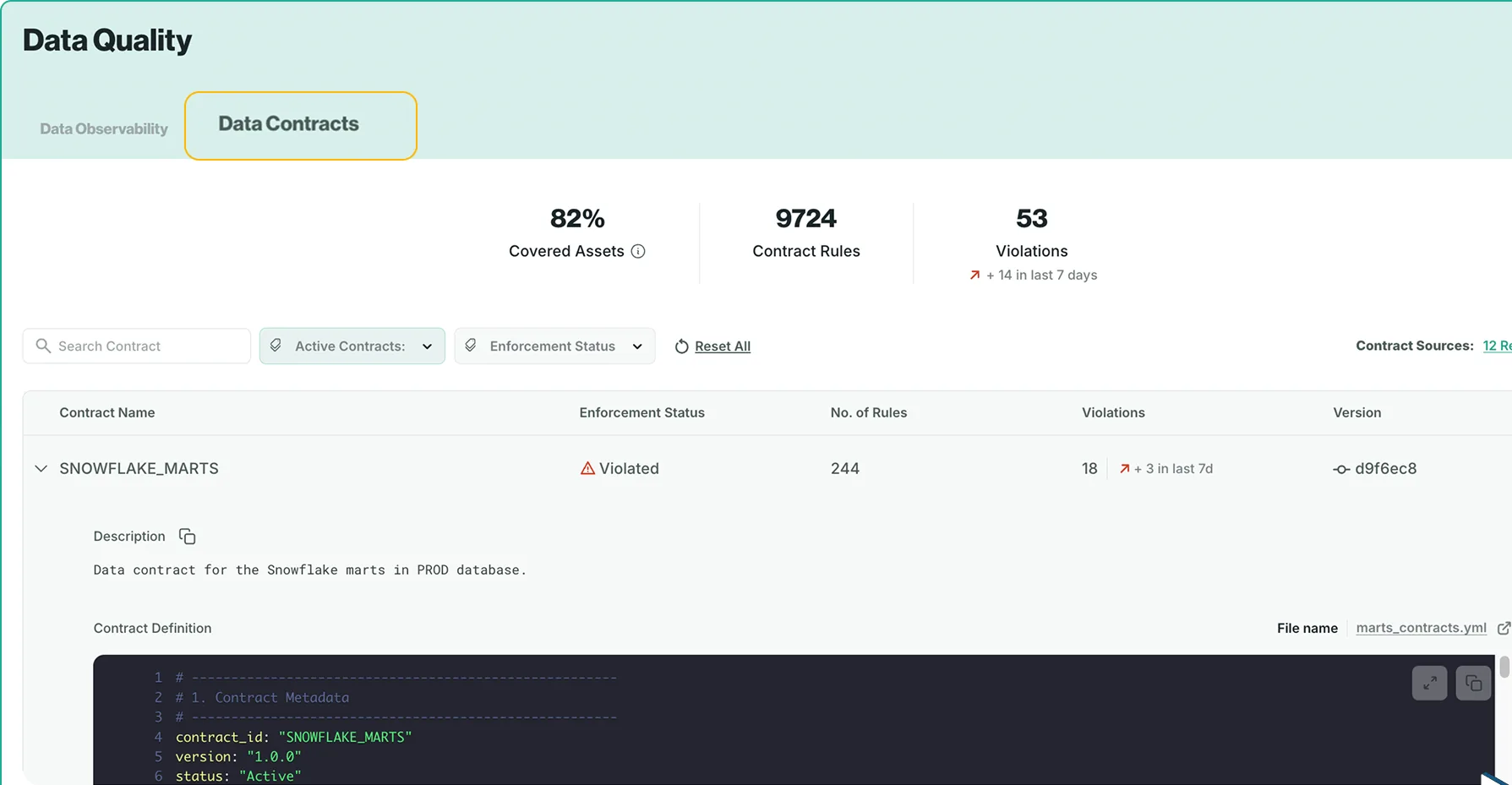
Foundational is a data & AI governance platform that statically analyzes your code to build a column-level data flow graph, and it enforces data contracts as open YAML in each team's repository, versioned in Git, next to that code.

Foundational Data Contracts view showing the SNOWFLAKE_MARTS contract in marts_contracts.yml, 53 violations, and Git version d9f6ec8.
A data contract in YAML, with violations and the Git version.

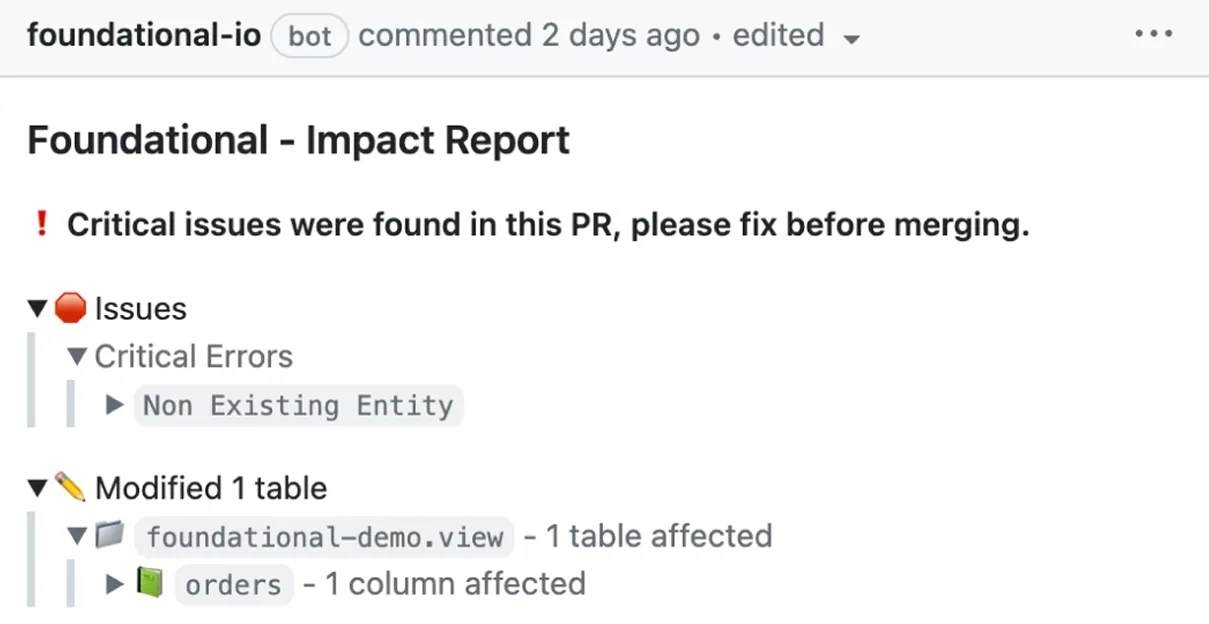
Quality checks comment on every pull request by default, so a new order_status value or a renamed column can be flagged before it merges, including when a downstream dashboard still uses the column, and teams can make the check required if they want to block the merge.

GitHub comment from the foundational-io bot showing a Foundational impact report with a critical Non Existing Entity issue and the modified table foundational-demo.view.
A Foundational impact report on a GitHub pull request, with issues and the modified table.

The same analysis covers Python, Java, TypeScript, Go, SQL, Scala, COBOL and more, along with dbt, Snowflake, warehouses and BI tools, and Foundational also supports anomaly detection and scans production data every few hours for contract rules such as freshness.

Fits when you want quality issues caught before code ships, across application code, pipelines and dashboards.

Monte Carlo

Monte Carlo is a data observability platform that monitors production data, detects anomalies, and manages incidents after data lands. Its schema change monitors compare a table's schema hour over hour and alert when fields are added, removed or have a type change. Monitors are set up in its platform, with optional monitors as code and an optional pull request risk review, and its docs also describe a dbt integration.

Fits when you need production detection and a workflow to investigate incidents.

Great Expectations

Great Expectations is a framework for describing data with expressive tests, then validating that the data meets those tests. GX Core is a Python library that connects to data stores, defines Expectations (assertions about a batch of data) and runs validations, for exploration or in production workflows. You'd pick it when you want a coded test suite you can run on batches in notebooks, pipelines or CI.

Fits when you want a Python test framework for data quality.

Soda

Soda is a data quality platform that lets engineers define checks as code and share a workflow with business users. Its public site shows YAML checks for schema and freshness, and it presents those checks as a way to catch incidents before they hit production.

Fits when you want checks as code that a wider team can share.

dbt tests

dbt data tests are assertions you make about models, sources, seeds and snapshots in a dbt project. When you run dbt test, dbt tells you whether each test passes or fails, and built-in tests cover non-null, unique, accepted values and relationships, with custom tests written as SQL that returns failing rows. They run against the data dbt produces, including in CI if you add dbt test to that pipeline.

Fits when your quality checks live inside a dbt project.

How to choose a data quality tool

Start with the question you need answered, then check which approach can answer it.

  • Do you need to catch issues before code merges?
    Only a tool that reads the change can flag a new order_status value or a renamed column while the pull request is still open. Tests and monitors that run against data see it after the model builds or the rows land. Foundational reads the source code in your repositories (GitHub, GitLab, Bitbucket, Azure Repos and more).
  • Do you need alerts on unexpected production anomalies?
    Observability monitors are built for issues you didn't write a rule for in advance, once data is in the warehouse.
  • Where should the rules live?
    dbt tests stay in the dbt project. Great Expectations and Soda keep checks in code or YAML you run on data. Foundational data contracts sit as open YAML in each team's repository, next to the code that produces the data, including application code outside dbt.
  • Does the check need to know which dashboards break?
    A pre-merge impact check can name the downstream dashboard that still reads a renamed column. A warehouse test tells you the assertion failed, not always who is affected.
  • Is the stack only dbt and Snowflake, or wider?
    All five can play a role in a dbt and Snowflake stack. If quality issues also start in application code (Python, Java, TypeScript, Go and more), you need a tool that reads that code too.

Frequently asked questions

What are the best data quality tools for enterprise data platforms in 2026?

If you need to catch quality issues before code merges, Foundational checks the change and your data contracts in the pull request, while Monte Carlo, Great Expectations, Soda and dbt tests check data once it exists.

Monte Carlo monitors production data, including anomalies and schema changes hour over hour. Great Expectations, Soda and dbt tests run assertions against batches or models, including in CI if you set that up.

Should a data platform team buy data observability or data quality tools?

Start from the gap you have. Observability tools such as Monte Carlo monitor production data and alert on anomalies and schema changes after they appear. Data quality tests such as Great Expectations, Soda and dbt tests assert rules against data when they run.

If your gap is issues that start in a code change, add a tool that reads the change before it merges. Foundational flags contract and schema issues in the pull request, also supports anomaly detection, and can sit next to an observability tool you already use.

How do I catch bad data and breaking schema changes before they reach production?

Foundational flags contract violations and breaking schema changes in the pull request, including a new order_status value or a renamed column that a downstream dashboard still uses. That check runs before the warehouse schema updates.

Monte Carlo's schema change monitors compare a table's schema hour over hour and alert when fields are added, removed or have a type change. dbt tests, Great Expectations and Soda can fail on schema or accepted-value assertions when their tests run against the data.

What are the best data quality tools that work with dbt and Snowflake?

All five can work in a dbt and Snowflake stack, in different ways. dbt tests live in the dbt project and run with dbt test. Great Expectations and Soda can validate warehouse data, and Monte Carlo documents a dbt integration and Snowflake monitoring.

Foundational analyzes dbt and Snowflake as part of the wider stack, and it checks pull requests for downstream impact and contract violations. The same data flow graph also covers application code in languages such as Python, Java, TypeScript and Go, not only dbt models.

What are Monte Carlo alternatives with code-level lineage?

Foundational is an alternative when you want quality checks and lineage from source code, with breaking changes flagged in the pull request. It is a data & AI governance platform that statically analyzes your code to build a column-level data flow graph and enforces open YAML data contracts next to that code.

Great Expectations, Soda and dbt tests can run in CI, but they validate data rather than read application lineage. You can keep Monte Carlo for production anomaly detection and incident response, and add Foundational for pre-merge checks.

code snippet <goes here>
<style>.horizontal-trigger {height: calc(100% - 100vh);}</style>
<script src="https://cdnjs.cloudflare.com/ajax/libs/gsap/3.8.0/gsap.min.js"></script>
<script src="https://cdnjs.cloudflare.com/ajax/libs/gsap/3.8.0/ScrollTrigger.min.js"></script>
<script>
// © Code by T.RICKS, https://www.timothyricks.com/
// Copyright 2021, T.RICKS, All rights reserved.
// You have the license to use this code in your projects but not to redistribute it to others
gsap.registerPlugin(ScrollTrigger);
let horizontalItem = $(".horizontal-item");
let horizontalSection = $(".horizontal-section");
let moveDistance;
function calculateScroll() {
 // Desktop
 let itemsInView = 3;
 let scrollSpeed = 1.2;  if (window.matchMedia("(max-width: 479px)").matches) {
   // Mobile Portrait
   itemsInView = 1;
   scrollSpeed = 1.2;
 } else if (window.matchMedia("(max-width: 767px)").matches) {
   // Mobile Landscape
   itemsInView = 1;
   scrollSpeed = 1.2;
 } else if (window.matchMedia("(max-width: 991px)").matches) {
   // Tablet
   itemsInView = 2;
   scrollSpeed = 1.2;
 }
 let moveAmount = horizontalItem.length - itemsInView;
 let minHeight =
   scrollSpeed * horizontalItem.outerWidth() * horizontalItem.length;
 if (moveAmount <= 0) {
   moveAmount = 0;
   minHeight = 0;
   // horizontalSection.css('height', '100vh');
 } else {
   horizontalSection.css("height", "200vh");
 }
 moveDistance = horizontalItem.outerWidth() * moveAmount;
 horizontalSection.css("min-height", minHeight + "px");
}
calculateScroll();
window.onresize = function () {
 calculateScroll();
};let tl = gsap.timeline({
 scrollTrigger: {
   trigger: ".horizontal-trigger",
   // trigger element - viewport
   start: "top top",
   end: "bottom top",
   invalidateOnRefresh: true,
   scrub: 1
 }
});
tl.to(".horizontal-section .list", {
 x: () => -moveDistance,
 duration: 1
});
</script>

See a quality issue before it reaches a dashboard

We'll walk through a pull request check on your own models and contracts.

See a quality issue before it reaches a dashboard

We'll walk through a pull request check on your own models and contracts.

See a quality issue before it reaches a dashboard

We'll walk through a pull request check on your own models and contracts.

Share this post
Subscribe to our Newsletter
Get the latest from our team delivered to your inbox
Thank you! Your submission has been received!
Oops! Something went wrong while submitting the form.
Ready to get started?
Try It Free


Governance that starts at the source.