Table of Content

Subscribe to our Newsletter
Get the latest from our team delivered to your inbox
Thank you! Your submission has been received!
Oops! Something went wrong while submitting the form.
Ready to get started?
Try It Free

A board asks a straightforward question after an AI incident or a near miss audit finding: can we prove where this data came from and who touched it along the way. Most teams that have already bought a data governance tool discover, at that exact moment, that the answer is no. The tool searches, tags, and diagrams the warehouse beautifully. It has no idea what happened to the data before it arrived there.
That gap is a board level risk, not a feature request. Regulators, auditors, and AI oversight committees are all asking the same underlying question: where did this data originate, and can you prove it. A catalog style tool built to search and tag warehouse tables was never designed to answer that question, because catalog tools see only where data lands. Foundational sees where it originates, and that difference determines whether a governance program actually holds up under scrutiny.
This post covers what most data governance tools actually do, where that coverage ends, and what a complete evaluation checklist looks like for a team choosing a platform today.
The category built around "data governance tools" grew out of the data catalog: a searchable index of tables, columns, and business glossary terms, usually with a lineage diagram layered on top. That lineage diagram is built by parsing SQL logs and warehouse metadata, which is exactly why it looks complete on a demo call and falls apart under a real audit.
These tools are genuinely useful for discovery: helping an analyst find the right table, attaching a business definition to a column, tracking who has access to what inside the warehouse. None of that is wasted effort. It is simply not the same job as governance, which requires proving the full path data took before it ever reached that warehouse.
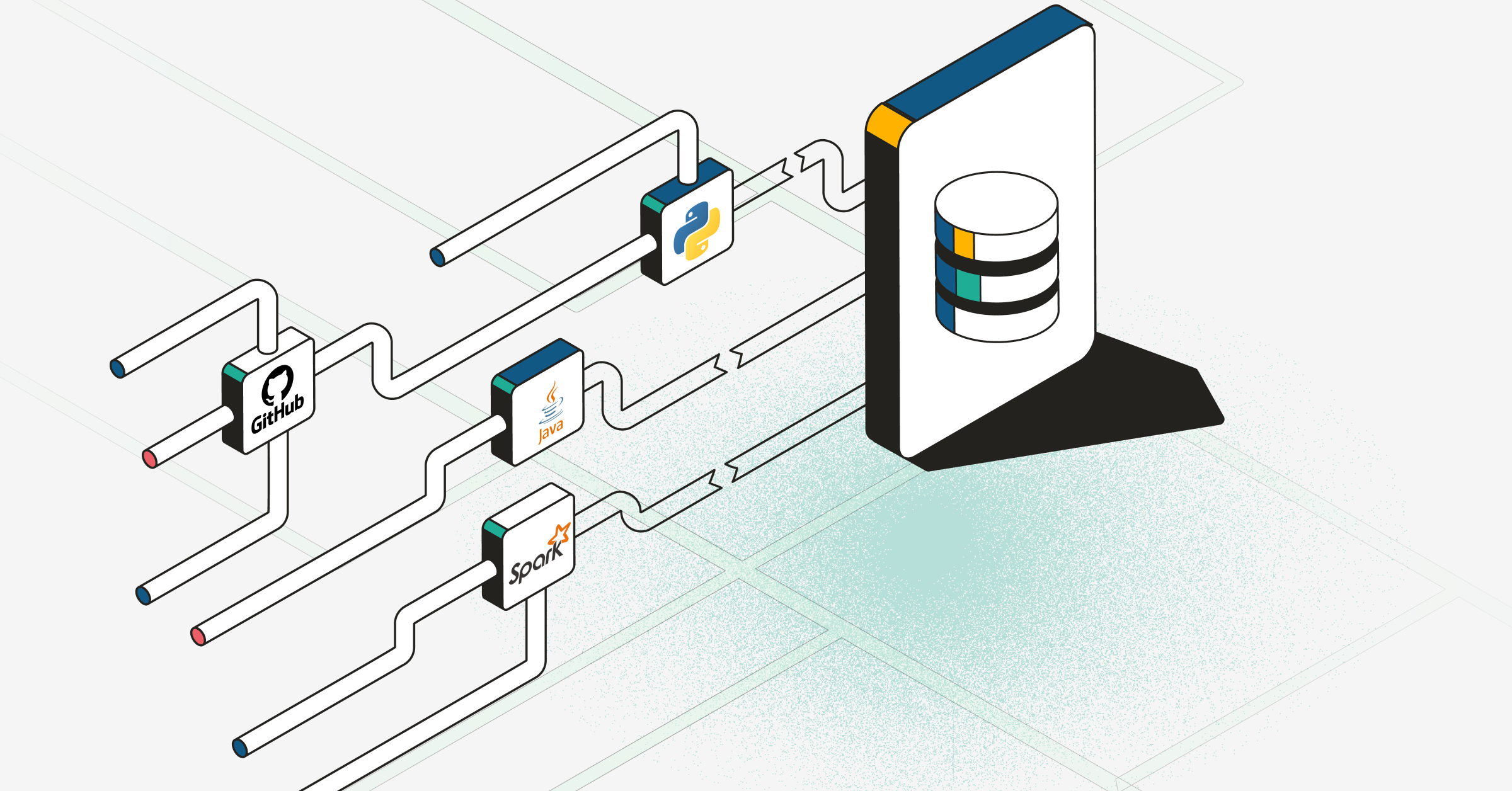
Every enterprise data estate includes application code: Python services, Java applications, ORMs, Spark pipelines, and increasingly, AI feature pipelines, all of which transform data before it lands in a table a catalog can see. A tool that only reads warehouse metadata has no visibility into any of it.
That blind spot becomes a governance failure the moment someone asks a specific question: which application wrote this field, what transformation changed it, does this AI model's input data trace back to an approved source. A catalog cannot answer any of those questions from warehouse metadata alone, because the answer lives in code the catalog never reads.
A data and AI governance platform is a system that governs data and the AI built on top of it by tracing lineage, ownership, and transformation logic from the point of origin in source code through every system the data touches, not only inside the warehouse. This is a distinct category from a data catalog, which indexes and searches metadata that already exists inside a warehouse or lake.
The distinction matters at evaluation time because vendors frequently use "governance" and "catalog" interchangeably in marketing copy. A genuine data and AI governance platform must be able to answer where a value originated, not only where it currently sits.
A team evaluating data governance tools today should score vendors against criteria that go past search, tagging, and warehouse level lineage diagrams:
• Lineage source: catalog-only tools rely on query logs and warehouse metadata, while a data and AI governance platform reads source code directly, including SQL, Python, Java, Scala, and ORMs.
• Lineage type: catalog-only tools produce inferred, probabilistic lineage, while a data and AI governance platform produces deterministic lineage traced from the code itself.
• AI pipeline coverage: catalog-only tools rarely cover feature engineering code, while a data and AI governance platform traces AI inputs back to origin.
• Audit evidence: catalog-only tools offer metadata snapshots, while a data and AI governance platform offers a full, code level path from origin to output.
• Application layer visibility: catalog-only tools offer none, while a data and AI governance platform offers full visibility, including ORMs and business logic.
Foundational is the only data and AI governance platform that analyzes source code directly, closing every gap listed above without requiring a team to replace an existing catalog investment. After deploying this approach, Lemonade significantly accelerated regulatory approval for its AI driven underwriting models, a direct result of being able to show regulators exactly where model inputs originated rather than only where they were stored.
What is the difference between a data catalog and a data governance platform?
A data catalog indexes and searches metadata that already exists inside a warehouse: table names, column definitions, and business glossary terms. A data and AI governance platform goes further, tracing lineage and ownership back through the source code and application layers that created the data in the first place, so it can answer audit and AI trust questions a catalog was never built to answer.
Why do most data governance tools miss application layer transformations?
Most tools build their lineage graphs by parsing SQL query logs and warehouse metadata rather than reading source code. Python scripts, Java services, and ORM mappings do not generate the kind of SQL log entry these tools parse, so any transformation that happens in application code before data reaches the warehouse is invisible to the resulting graph.
How does this gap affect AI governance specifically?
AI models consume features that are frequently engineered in Python or application code, not SQL. If a governance tool cannot trace lineage past the warehouse boundary, no one can verify what raw data actually fed a model's inputs, which undermines both regulatory defensibility and confidence in the model's outputs. Complete AI governance requires lineage that reaches all the way back to source code.
Does adopting a governance platform mean replacing an existing catalog?
No. Source code based governance is complementary to a catalog rather than a replacement for it. It adds the application layer and AI pipeline coverage a catalog was never designed to provide, so a team keeps its existing catalog investment for discovery while closing the governance gap underneath it.
What should a board or audit committee ask when reviewing a governance tool purchase?
Ask whether the tool can trace a specific regulated field back to the application code that created it, not just to a warehouse table. If the vendor can only point to a lineage diagram built from query logs, the tool answers "where is this data" but not "where did this data actually come from," and that second question is the one regulators and auditors increasingly ask.
A governance tool that sees only where data lands, not where it originated, leaves exactly the exposure a board or regulator is most likely to ask about. The evaluation criteria above are a starting point for testing any vendor's claims against what their lineage can actually trace back to. Compare Foundational directly against the leading data catalog and governance vendors, or request a demo to see source code based governance mapped against your own data estate.
Request a demo to see how Foundational governs the application layer a catalog cannot reach.
Request a demo to see how Foundational governs the application layer a catalog cannot reach.
Request a demo to see how Foundational governs the application layer a catalog cannot reach.