Table of Content

Subscribe to our Newsletter
Get the latest from our team delivered to your inbox
Thank you! Your submission has been received!
Oops! Something went wrong while submitting the form.
Ready to get started?
Try It Free

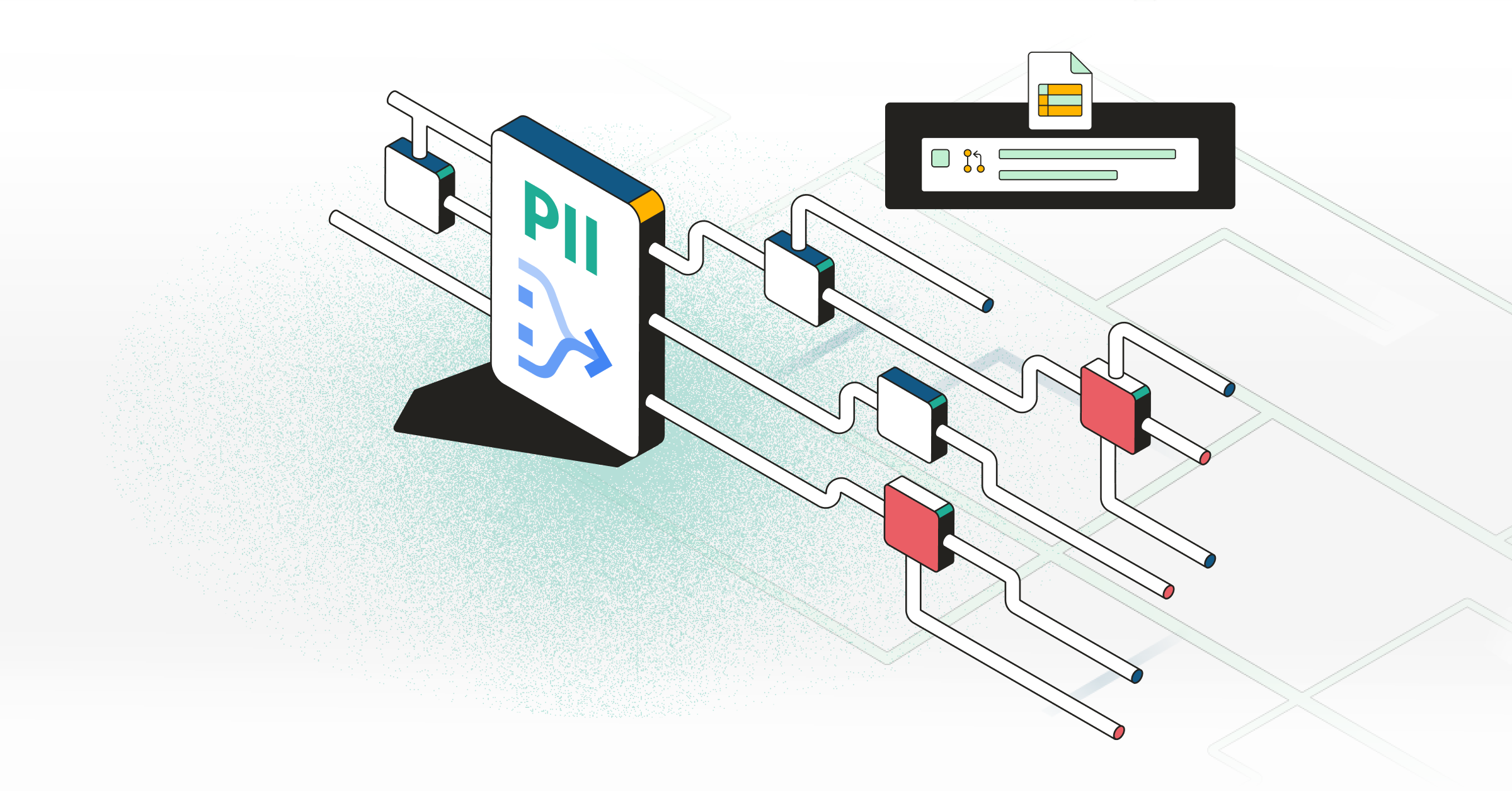
A compliance leader can usually produce a clean list of every warehouse table that contains a Social Security number or an email address. That list satisfies an internal audit right up until a Data Subject Access Request or a breach notification asks a harder question: name every system this specific person's data has touched, including the application services, ORMs, and backups that never show up in a warehouse scan.
GDPR and CCPA both require exactly that kind of accounting, not a snapshot of where PII currently sits. A PII inventory built only from warehouse metadata cannot answer where a field traveled before it arrived there, and that gap turns a routine compliance request into a scramble that pulls in engineering, legal, and whoever still remembers how an old ORM mapping worked. Source code analysis closes this gap by tracing PII fields from the application code that created them through every system they pass through.
This post covers what a warehouse-level PII inventory actually covers, where application layer governance breaks down, and what complete PII field tracing looks like under real regulatory pressure.
Most PII governance programs start with a scanning tool that classifies columns inside a warehouse: this table has an email address, that one has a national ID number. That work produces a real and necessary inventory of where sensitive fields currently live inside the data platform.
It does not answer how those fields got there. A PII scanner reading warehouse metadata has no visibility into the Python service that collected the field at signup, the Java application that passed it through three microservices, or the ORM that renamed and recast it along the way. The inventory is accurate about the destination and silent about the path.
GDPR Article 30 requires organizations to maintain records of processing activities, and CCPA gives consumers the right to know what personal information has been collected and how it has been used and shared. Both requirements assume an organization can answer questions about the full journey of a PII field, not just its current storage location.
That journey almost always runs through application code before it ever reaches the warehouse: a signup form written in a web framework, an ORM layer mapping user objects to database rows, a Java service enriching a customer record, a Python job feeding a marketing pipeline. None of that activity generates the kind of SQL log a warehouse-level scanner reads, so none of it appears in a governance program built only around warehouse metadata.
Cross-platform lineage is the ability to trace a single field of data across every system it touches, from the source code that first created it through every application, pipeline, and warehouse table it passes through afterward. Unlike a warehouse-level scan, it does not stop at the boundary of any one system.
For PII governance specifically, cross-platform lineage means a compliance leader can answer, with evidence, exactly which services and pipelines a given customer's Social Security number or health record passed through, not only which tables currently store it.
Complete PII governance requires reading the application code that collects, transforms, and moves sensitive fields, not only scanning where those fields eventually land. Foundational is the only data and AI governance platform that analyzes source code directly, including SQL, Python, Java, Scala, and the ORM layer, so a PII field can be traced from the exact line of code that created it through every downstream system it touches.
After adopting this approach, Vio reduced potential data issues by 52 percent and cut cycle time by 37.5 percent, a direct result of catching PII handling problems in application code before they became compliance incidents rather than discovering them during an audit. For a governance and compliance leader, that shift changes a Data Subject Access Request from a multi-team investigation into a query with a documented, defensible answer.
Here is where common PII touchpoints fall relative to a warehouse-level scan:
• Signup forms and web applications: warehouse-level scans have no visibility here, while source code lineage traces the field from the collecting code itself.
• ORM mappings between app and database: warehouse-level scans have minimal to no visibility here, while source code lineage covers renamed and recast fields fully.
• Java and Python backend services: warehouse-level scans have no visibility here, while source code lineage covers derived and enriched fields fully.
• Marketing and analytics pipelines: warehouse-level scans have only partial visibility here, while source code lineage traces the field through each transformation.
• Backups and archival systems: warehouse-level scans rarely track these, while source code lineage includes them as part of the traced path.
How do you govern PII data across application layers and pipelines?
Governing PII across application layers requires tracing sensitive fields from the source code that creates or collects them, such as signup forms, ORMs, and backend services, through every pipeline and warehouse table they subsequently touch. A warehouse-level scan alone cannot show this path because most of the relevant activity happens before the field arrives in the warehouse.
What does GDPR actually require for PII lineage?
GDPR Article 30 requires organizations to maintain records of processing activities, which includes documenting where personal data is collected, how it is transformed, and where it is shared. Fulfilling this requirement fully means tracing a field's path through application code and pipelines, not just identifying which warehouse tables currently store it.
Why do warehouse-level PII scans miss application code?
Warehouse-level scanners classify columns based on metadata already present inside the warehouse. They do not parse the Python scripts, Java services, or ORM mappings that handled the data before it arrived, so any PII transformation or transfer that happens in application code is invisible to a scan that only reads the warehouse.
How does this affect responding to a Data Subject Access Request?
A Data Subject Access Request under GDPR or CCPA requires naming every system that has processed a specific individual's data. Without lineage that traces PII through application code and pipelines, answering this fully requires manually reconstructing the data's path, which is slow and prone to gaps. Complete cross-platform lineage turns that reconstruction into a direct lookup.
Does closing this gap require replacing an existing PII scanning tool?
No. Source code analysis is complementary to a warehouse-level PII scanner rather than a replacement for it. It adds the application layer and pipeline visibility a scanner was never built to provide, so the existing tool keeps doing inventory work while the governance platform closes the path-tracing gap underneath it.
An accurate PII inventory answers where sensitive data sits today. A defensible governance program has to also answer where it came from and everywhere it traveled along the way. See how Foundational's compliance and regulated industries coverage traces PII fields from source code to every downstream system, or request a demo to see PII lineage mapped against your own application layer.
Request a demo to see PII lineage mapped against your own application layer.
Request a demo to see PII lineage mapped against your own application layer.
Request a demo to see PII lineage mapped against your own application layer.