Table of Content

Subscribe to our Newsletter
Get the latest from our team delivered to your inbox
Thank you! Your submission has been received!
Oops! Something went wrong while submitting the form.
Ready to get started?
Try It Free


Last week at DGIQ, I gave a presentation with the title “Data Governance Goes Agentic: Bringing Agents and Context into Data Governance”. Watch my session here: https://youtu.be/3-nSbHjtn5o
A lot of the conversations at the conference centered around data governance (obviously), AI readiness, agents, automation, and how quickly AI is changing the enterprise landscape.
But I kept going back to what I think is a key point: What happens when we apply agents to data governance itself? Not as a chatbot sitting on top of metadata. Not as another assistant generating summaries. I mean agents that can actually understand how enterprise data systems work.
Because governance teams are sitting on one of the hardest problems in AI right now: enterprise context. And realistically, most organizations still do not have enough of it.
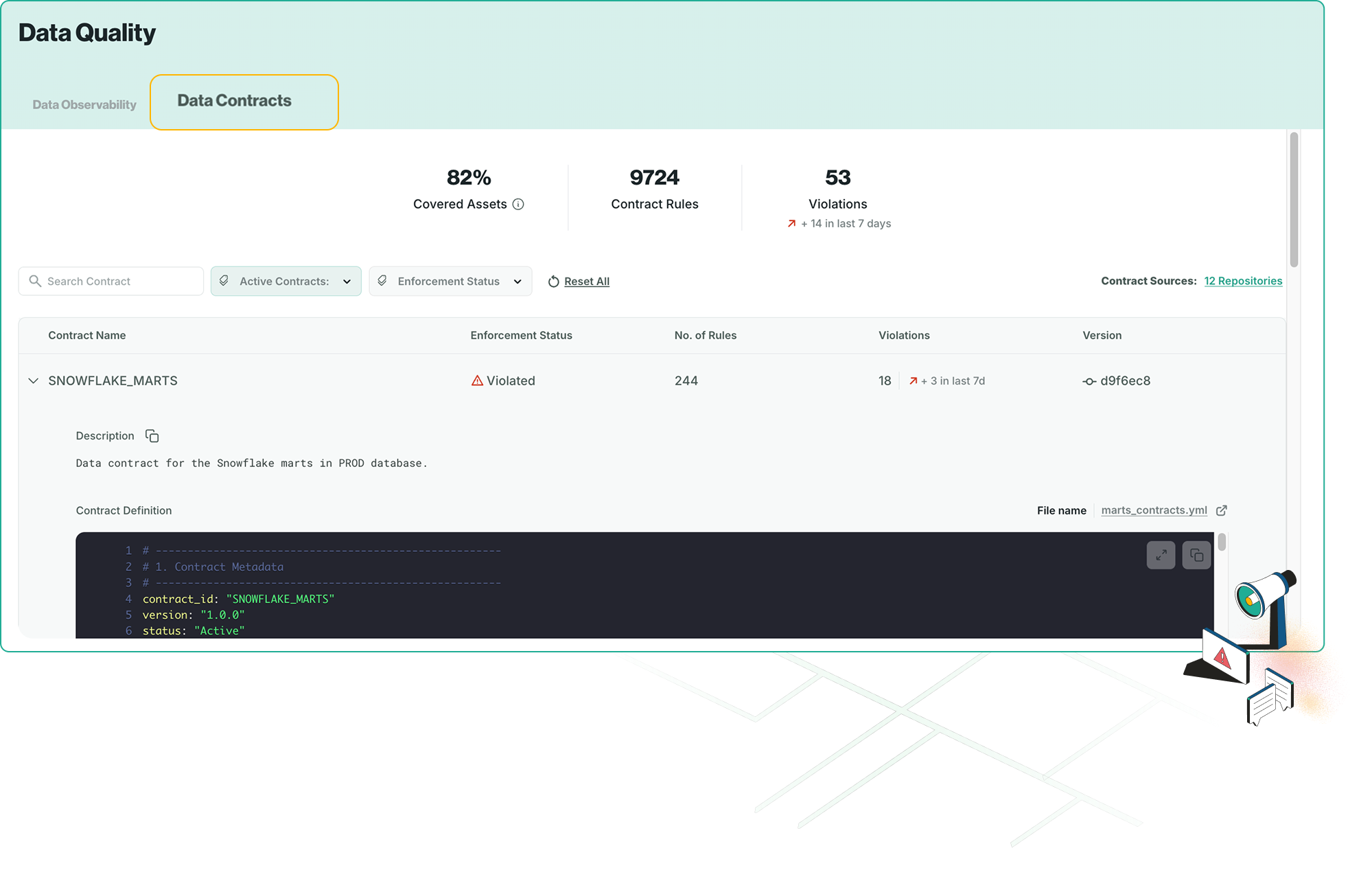
For years, governance programs focused on documentation, metadata, ownership, observability, and data quality.
Those are still important. But AI (and for some industries, recent regulation) changes the expectations completely.
Now teams need to answer questions like:
And they need those answers immediately. The problem is that enterprise data environments are deeply fragmented.
Business logic lives in source code. Transformations happen across multiple platforms. Critical dependencies exist in Python, Java, SQL, CRMs, BI tools, and legacy code.
Most governance systems only see a small slice of that reality. That becomes a serious issue when the organization is lacking that visibility, and when AI starts making decisions based on incomplete context.
One thing I discussed during the session is that governance agents need much more than metadata to operate effectively.
There are really two layers of context. The first layer is the traditional governance layer:
The second layer is where things get interesting:
That second layer is what gives AI systems actual understanding. Without it, agents can sound intelligent while still missing critical dependencies, transformations, or downstream impact.
This is why so many enterprise AI projects struggle with trust. The models are not necessarily the problem. The missing context is.
We made an early decision that governance needed to start closer to where data is actually created and transformed.
That is why we analyze source code. Not because source code analysis is interesting on its own, but because some systems can only be understood by looking at the source code. And typically how data is flowing between systems is code. And lastly because change management is much more important now than it was, and it’s time we bring proper SDLC in the data governance space.
When you combine source code analysis with lineage and metadata, you get a much more accurate picture of how data flows across the enterprise. That changes what governance teams can do.
You can:
This becomes especially important for regulated industries, AI governance initiatives, and large enterprises operating across dozens or hundreds of systems.
One of the ideas I kept emphasizing during the presentation is that agents are only as useful as the context they receive. If the context is partial, stale, or disconnected from reality, the outputs will be too.
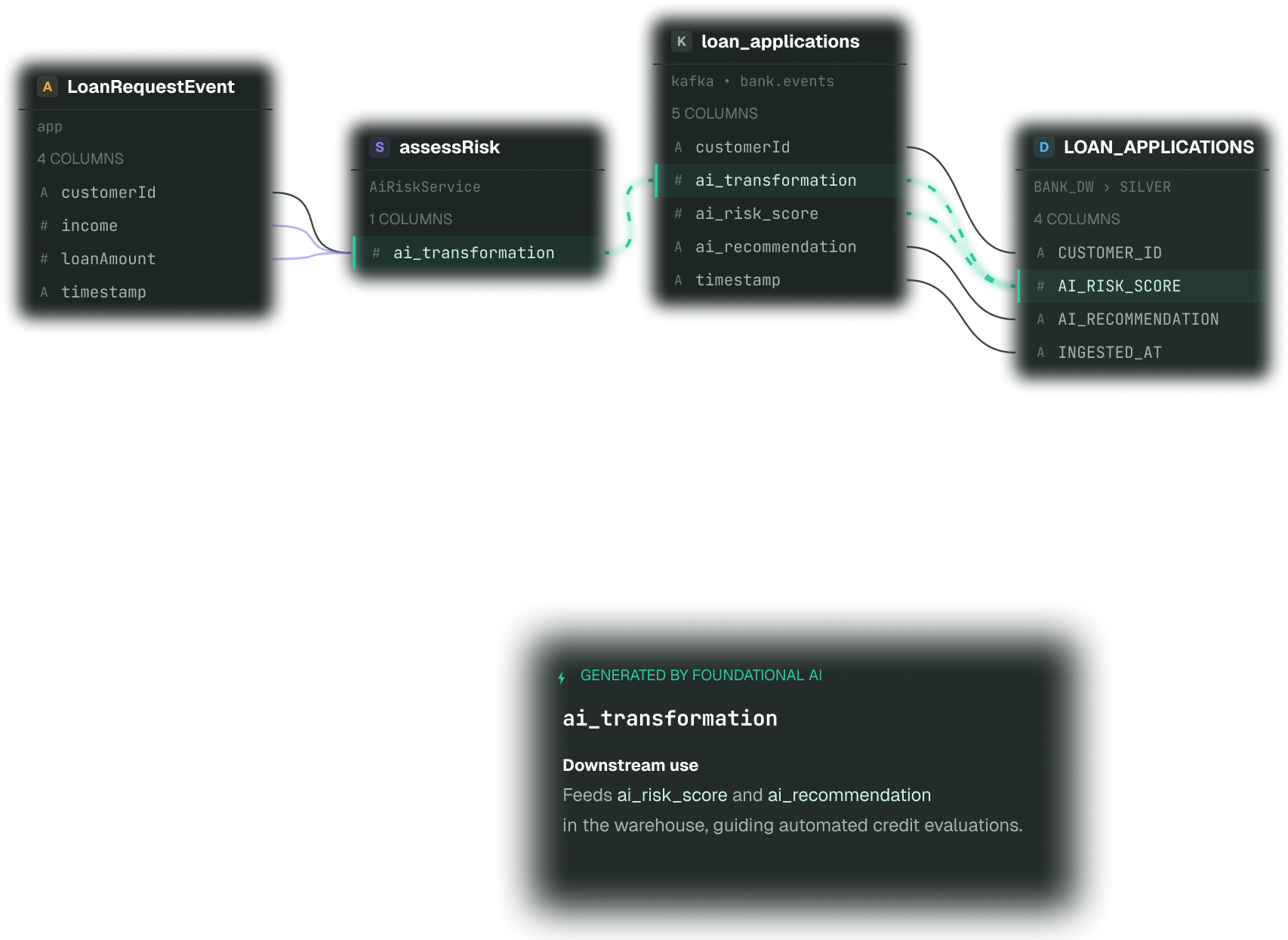
This is where lineage becomes incredibly important. Not just surface-level lineage generated from warehouse logs, but deterministic lineage grounded in source code and operational systems.
That level of context allows agents to reason about:
And importantly, it allows governance to move at engineering speed.
Another theme that came up repeatedly at DGIQ was speed. AI is accelerating how quickly organizations build, change, and deploy systems. Governance cannot operate as a slow, after-the-fact process anymore. It has to integrate directly into engineering workflows, CI/CD, pull requests, and operational systems.
That is ultimately what I mean when I talk about agentic governance. Not replacing governance teams with AI. Giving governance teams systems that can reason, automate, validate, and operate using the full context of the enterprise.
Because the organizations that succeed with AI will not necessarily be the ones with the biggest models. They will be the ones with the clearest understanding of their own data.