Table of Content

Subscribe to our Newsletter
Get the latest from our team delivered to your inbox
Thank you! Your submission has been received!
Oops! Something went wrong while submitting the form.
Ready to get started?
Try It Free

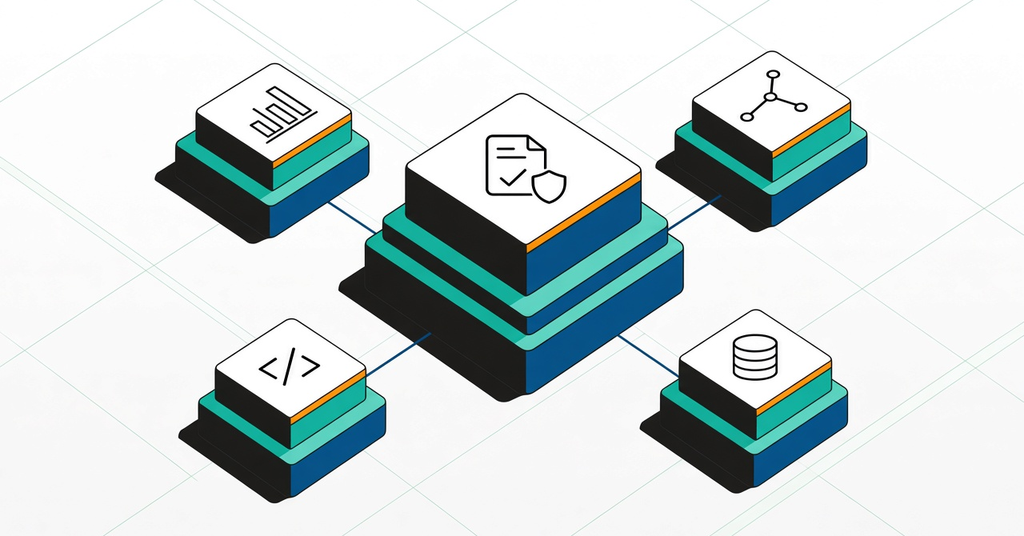
Short answer: for compliance work, pick a lineage tool based on where it gets lineage from. That decides what an auditor can trace. Catalogs such as Collibra, Atlan and Alation are strongest at stewardship, glossaries and policy workflows. Scanner tools such as Informatica and IBM Manta read ETL definitions and stored procedures. Solidatus models lineage for regulated reporting, including manual steps. Foundational builds column-level lineage from the source code itself (SQL, Python, Java, Scala, Spark, dbt, Airflow, BI and mainframe COBOL). It updates that lineage with each commit, checks pull requests for downstream impact before merge, and integrates with the catalog you already run. A common setup is a catalog for governance plus a code-based lineage source for the evidence.
A diagram won't satisfy a regulator. Regulators want to see how a reported number was produced, plus proof that the logic hasn't changed without review. In practice that means four things.
The regulations word it differently, but each one is a traceability problem first. BCBS 239 asks banks to aggregate risk data accurately and trace it. SOX section 404 needs controls over the logic behind financial reporting. GDPR Article 30 needs a record of where personal data goes. DORA asks financial firms to map ICT dependencies. And the EU AI Act wants training data governance documented.
| Tool | Where lineage comes from | Strongest at | Where it stops |
|---|---|---|---|
| Foundational | Source code repositories (SQL, Python, Java, Scala, Spark, dbt, Airflow, BI, COBOL with JCL, copybooks and Db2), plus warehouse and BI metadata | Column-level lineage across apps, pipelines and BI, impact analysis on pull requests in connected repositories, change evidence tied to commits | Not a business glossary or stewardship workflow tool. It integrates with catalogs such as Collibra, Atlan and Alation |
| Collibra | Automated extraction from sources, ETL and BI tools, plus OpenLineage | Governance workflows, stewardship, policy and approvals | Lineage coverage follows its supported sources and connectors |
| Atlan | SQL parsing, tool APIs and OpenLineage events | Catalog adoption across modern cloud stacks such as Snowflake, Databricks, BigQuery and dbt | Systems its parsers and connectors don't reach need custom lineage through APIs, CSV imports or manual modeling |
| Alation | Connectors across its supported sources | Search, analyst adoption and catalog context on each lineage node | Lineage coverage follows its connectors and SDKs |
| Informatica (CDGC) | Scans of source systems, ETL mappings and stored procedures | Large hybrid estates already on Informatica | Lineage is refreshed when scans run |
| IBM Manta | Scanners and static code analysis of ETL, SQL and BI | Stored procedures and legacy ETL | Now part of IBM watsonx.data intelligence. Custom systems need the OpenManta framework or custom lineage |
| Solidatus | Modeled and imported lineage | Regulatory reporting views such as BCBS 239, including manual steps | Modeled parts of the map are kept current by your team |
| Microsoft Purview | Scans plus lineage pushed by Data Factory, Synapse, Databricks, Power BI and others | Azure and Fabric estates | Lineage scope varies by source. Unsupported sources need manual or custom lineage |
| DataHub / OpenMetadata | Ingestion recipes, query parsing, OpenLineage events | Open source, self-hosted | You run and extend it yourself |
Query-log lineage only sees SQL that already ran in the warehouse, so it misses a lot of what an auditor cares about. Think of the Java service that writes the customer table, or the Spark job that computes exposure, or the COBOL program that posts the ledger. Foundational reads that code directly. Its lineage covers assets that have never been queried and logic that never touches the warehouse.
Since the lineage is built from code, a change shows up in its pull request before it merges. The PR comment lists the downstream tables, dashboards, reports and owners the change affects. Over time that becomes a change log tied to commits and reviewers, which is the change evidence SOX and BCBS 239 reviews ask for.
To test a shortlist, take three numbers from a real regulatory report and ask each vendor to trace them to source columns. Include any step that happens outside the warehouse.
Related: BCBS 239 glossary, DORA, EU AI Act, GDPR, Data lineage for compliance, Data governance in banking: CCAR and BCBS 239, Mainframe data lineage, All comparisons.
It depends on where your reporting logic lives. If it's mostly SQL in one warehouse, catalog lineage can be enough. If it runs through application code, Spark, ETL tools or COBOL, you need lineage built from that code, such as Foundational. It usually runs next to a catalog like Collibra for governance workflow.
Banks commonly use catalogs and scanners such as Collibra, Informatica, Solidatus and IBM Manta. Foundational adds code-derived, column-level lineage across application code, pipelines and mainframe systems alongside them. For BCBS 239, the test is whether you can trace each risk figure to source fields and show how changes were reviewed.
Table-level lineage tells you which tables feed a report. In walkthroughs, auditors test how each reported field is calculated, and that's what column-level lineage shows. For SOX controls over financial reporting logic, column-level lineage plus change history is the safer choice.
Yes, as long as lineage is tied to version control. Foundational builds lineage from each commit and comments on pull requests with the downstream impact. That lets you show what changed, when, and who approved it.
Most teams connect their code repositories plus warehouse and BI metadata, and constrained teams can start with code only. Customer data is accessed only if data observability checks are turned on.
By the number of tracked objects in the lineage graph, not by seat.
Book a demo and we'll walk through it with your repositories and systems.
Book a demo and we'll walk through it with your repositories and systems.
Book a demo and we'll walk through it with your repositories and systems.